Thursday, April 28, 2022

party note

 What follows is an essay about pairing, written for our Paella Party that we threw last year in collaboration with Kat & Mike from Motorshucker, Mac, and Andres & Dain from Buen Viaje. We’re throwing another party tonight with the same crew, this time serving pozole. We (between Rainbow and Motorshucker) always write for our parties and it feels nice to be able to revisit the event and share it with you. There are things that are specific to that night and then things that guide us regularly. Like that pairings are real but more interesting when you think about what is being paired broadly. And how it’s still a little chilly but after months of that feeling we have a new way of thinking about it, fresh wines from aromatic grapes that mimic the flowers that have finally pushed their way up through the soil. And the magnolia tree in front of the house is lit up with blooms, we also want to be lit up with blooms and to pass it on.


-


It was such a joy to write the wine list for this evening, what we’ve been calling the Puerto Paella Party. It was also such a joy to be a very small part of Mico’s creative process in formulating this dish, which feels generous in his life experience. As son, cook, wine professional. This wealth of experience makes for food with a lot of depth but also feels easy, not overwrought, I’m tempted to say it feels natural. I just did.


In picking the wine to complement something that feels so intimate, that Cub and I also feel close to, we had many considerations. Some feel familiar, like how does the taste of the food change (for the better we hope) when taken with a sip of wine. A traditional concept that we both cling to and throw in the garbage periodically, I’m not sure if this melodrama is for anyone else but the people who are often tasked to think about “pairing”. Through Rainbow though, we both have become more interested in a good pairing, and that probably has to do with the other ways we’ve come to think about it.


Tonight we’re in Cub’s backyard, I’m writing this on Friday (November 19th) but it’s been chilly and I’m sure it’s chilly now. The grills and the fire provide some warmth, so does the music from Mac and Buen Viaje and the intimacy of eating and drinking in a place that’s only public sometimes, but the wine provides another opportunity. For warmth we’ve embraced a lot of wine from places where grapes see the sun and the potential for alcohol can be higher. It’s exciting to crave the warm flush in the cheeks, we hope it helps soften the blow that can be this seasonal shift.


As we’ve joked, a lot of the wines we’ve chosen for tonight are 100% grenache, also called garnatxa (noir, blanc) or contain some amount of the grape. It was an accident, but we did feel, taking into considerations the ~*flavors*~ and the place of imbibing, and the depths these wines plumb with the heights that they reach (the natural wine high) spoke to the food and the evening. We actually would have changed it to include other grape varieties -maybe it is too monotonous? But before we could even question it for too long, Mico was like, “So stoked about all the grenache.” Or something like that. It’s also one of his favorite grapes. He shared some more happy coincidences, mostly about Bruno Duchêne’s wines (we have a lot of his wines because he is one of Cub’s perennial favorite producers). The white pet nat Duchêne makes is called Suzette, the first name of Mico’s mother. Duchêne also makes a red wine called La Luna, which happens to be Suzette’s last name. Her presence in the wine list, as in the dish, was the signal it was spiritually complete. A deep pairing.


All these wines are super different anyway. Grapes being only one consideration of many.


Grenache tonight: Potron Minet Pari Trouillas Blanc & Rouge, Bruno Duchêne Suzette, Celler de Escoda Sanahuja Nas del Gegant, Petit Domaine de Gimios Rosé, Le Temps des Cerises Un Pas de Cote, Bruno Duchêne La Luna Rouge, Matin Calme Bonica Marieta, Toni Sanchez Ortiz Saurí, Le Temps Retrouvé L’Harmonie, Jordi Llorens Blankaforti, Portes Obertes Petricor


Thursday, April 21, 2022

artichoke as metaphor

 “It’s easier to write about artichokes than to cook them,” writes the cook and author Joyce Goldstein in her book Cucina Ebraica: Flavors of the Italian Jewish Kitchen. I should know - this is my second time blogging about them in less than a year. The first time was last summer when Nichols Farm in Illinois managed to grow some. Right now, in southern Italy, in regions like Campania, the artichoke season peaks. From the Midwest, it’s hard to imagine ground not just unfrozen but yielding carciofi, with those spiny, outer space-looking celadon leaves. 


To the Midwest-born cook and writer David Tanis, artichokes seemed totally foreign when he moved to California. In Heart of the Artichoke, his 2010 book, he writes, “What is an artichoke, anyway? An unusual yet common vegetable that has been around for a very long time. We call it a vegetable, but actually it is the flower bud of a thistle.” He continues, “The artichoke is ripe with metaphor and parable possibilities. Getting past the thorns to the sweet center, all of that. Not at all like reaching up and harvesting a sweet peach, eating an artichoke requires a bit of work.”


By this virtue, Midwesterners are artichoke cooks. A cold season of layering up and down in many garments teaches us the patience to peel back tough outer leaves, to depod fava beans, to top and tail.The extra work involved in preparing artichokes is integral to their culinary history. Inside the walled ghetto to the east of the Tiber River where Pope Paul IV forced all the Jews in Rome to live, vegetables were readily available, whereas access to fish and meat was more restricted. Jewish cooks, Goldstein says, found ways to make vegetables feel extra special for celebrations. And carciofi alla giudia, fried artichoke hearts, “became an architectural showpiece: a bouquet of blossoms so dramatically splayed and browned, they looked like copper-dipped chrysanthemums” in the words of Goldstein, from the same book. 


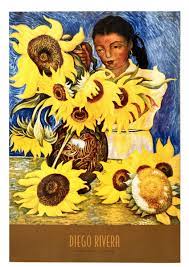
To me, the slightly squished sunflower look of the beautiful carciofi alla giudia evokes Van Gogh, the way the frying holds the petals bent askew. I can compare the sense of motion trapped in a moment achieved by both painting and frying. I also think about a print of the Diego Rivera painting, Muchacha Con Girasoles, that hung in the waiting room of my first therapist’s office. It was summer and I was 19 running around Manhattan crashing at friends’ places, hiding from my parent’s house, and when I got to that tiny air conditioned waiting room and collapsed into the chair across from Muchacha, I could sit still. Just before the door opened. 


Muchacha con Girasoles" (Print) -Diego Rivera | Fondren Art Gallery


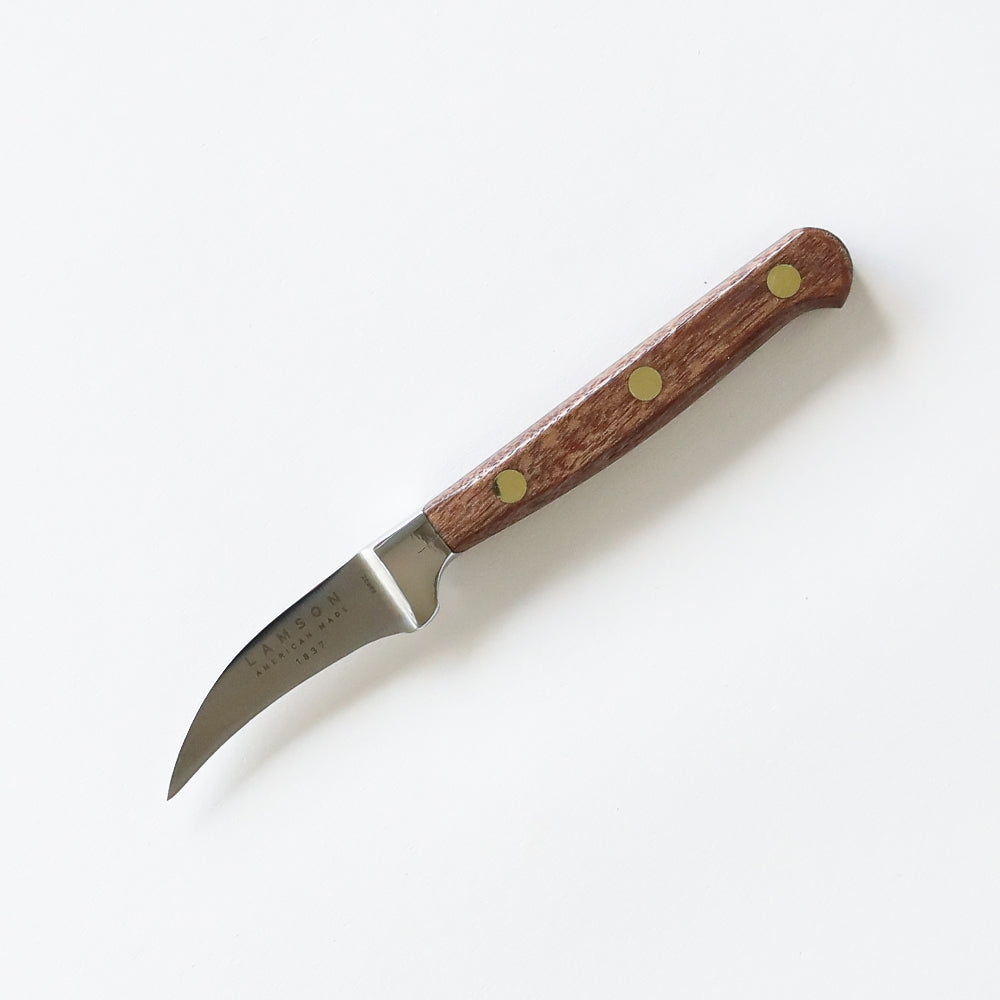
The act of preparing artichokes is called turning, which is kind of life wood turning - you are carving away as you rotate the material in your hand. There’s a special knife called a coltello da carciofi curvo, which has a hooked blade with a curved point. You can use this tool or simply a paring knife to shape the artichoke. Traditionally, the heart is shaped into a rose. I thought of how Em showed me the floral design technique of peeling back some petals from a rose to give it shape and dynamic life. Artichokes are sculptural, shaped by the gesture of a hand. 


Lamson | 2.5 Premier Forged Bird's Beak Pairing Knife


I really love to deep fry foods for my dear ones, to me expending the resources (money, mostly in the form of oil, more on that in the recipe) and care (sometimes it gets messy, you have to be careful not to burn yourself) to cook in an abundance of hot fat shows the utmost affection. 


The thing is, we almost never have artichokes, and when we do, they’re usually very different from the kind Romans use, which have long stems and no choke. I wanted to take three artichoke elements - lavishing of labor, gesture and textural contrast between a custardy center and crispy exterior - and find a way to express them. 


Consider the onion. It has petals to peel, lends itself to carving by hand, and loves to be fried. So I made, basically, a blooming onion, but cut it asymmetrically, and fried it in olive oil. It’s really fun to play around with the peeling back of the layer. With a sprinkle of lemon juice and plenty of coarse salt, these onions feel special and worthy of my loved ones, a humble vegetable lavished in all the attention I want to give it. 


Onion in Bloom 


each onion serves about two people as an appetizer/snack, increase the measurements as you add onions, except for the oil, which you can use the same amount of and just work an onion at a time


8 ounces extra virgin olive oil (does not need to be an expensive kind)

8 ounces grapeseed oil 


You can save this oil for use on other fried foods, and it will last for 2 months or up to 3 uses. Strain it before storing. For more on frying in olive oil check out this earlier blog


1 medium - large yellow or vidalia onion 


¼ cup all purpose flour 


Sea salt 


1 egg, beaten 


2 tablespoons buttermilk, milk or water 


Sprinkle of lemon juice


Make your blooms. Peel the outer layer of onion skin. Keeping all the leaves attached to the hairy button of the onion, carve petal-like slices using a paring knife. Remove long strings from the roots but be sure to keep it intact- don’t trim it off. Fan out the petals. Toss the onion in flour and season with a little salt too. Make sure you get flour in all the crevices. In a separate bowl, beat the egg with the liquid. Then coat onion in the beaten egg, before returning it again to be thoroughly tossed in flour. Shake off excess. Wrap your battered onion in plastic wrap or in a sealed bag and place in the freezer for a minimum of 15 minute and up to 1 hour. 


Heat the oil to 350 degrees in a saucepan. You want a saucepan with sides that are high enough to contain some splashing, but not so high-sided as a stock pot (this can cause oil to burn). You can check the oil temperature with a candy thermometer if you have one, or you can gauge it by sprinkling a little flour in and seeing if it sizzles. 


Submerge the onion right from the freezer in the oil. Fry until golden brown, about 10 minutes. Move the onion around to make sure all of it gets fried. Drain on a paper towel or wire rack. Dose in salt immediately. Serve right away with a squeeze of lemon juice. 


Sauce


I made a dipping sauce with mayonnaise, water, hot sauce and lime juice…be as creative or keep it as easy as you like! Creamy works well. This is also really delicious with just the lemon and salt. 


A note on wine 


We have some fresh and bright new Alpine wines in store from ça boit libre in the Savoie. It would enhance the experience of artichoke or onion turning and carving to have something to sip on. I’m imagining a glass of the Chasselas would be excellent to keep the cook company. 


Friday, April 15, 2022

fasting (and feasting) part 1

 I rely on cooking, eating and drinking to connect to the rhythms of life, to mark occasions, to grasp time.  Easter is this weekend, and I keep thinking about my past, when fasting, like eating, helped me process the changing seasons. Particularly winter to spring, to what feels like the first full step into a new year. 


First I have to explain a little that I was raised Catholic and Presbyterian. I made my confirmation in the Catholic Church. The more I aged into the Church the more I felt alienated, angered and conditionally welcome, conditions I could not or would never meet. It took me a bit to understand that there’s a part of me that feels culturally Catholic even if I’m not practicing anymore.


The modern Catholic convention for fasting is one light meal and two small snacks, for people whose health doesn’t prohibit it, and who are between 18 and 59. During Lent this practice intends to mirror Christ’s isolation in the desert for 40 days and 40 nights, and to make room for the contemplation of the sacrifice Christ made in his death for human sin. 


Like lots of people, I've wanted to shrink my body since I was a child. The first opportunity where dieting was somewhat socially acceptable or at least somewhat tolerated by my parents was at Lent. Lent allowed me to give up sugar, fried foods, pasta, etc, all things I enjoyed eating that I understood to be the worst, according to things like the South Beach diet (I’m 33). 


My Mom did not like that I was giving up foods. She always says you should take something positive on. I think she also saw her child dieting and wanted to discourage that. She told me that on Sundays it’s ok to do what you gave up, to eat the fries. I really admire how she told me this, trying to give me back some control over the rules around my body. She’s an expert at navigating limitations in order to support me and our family. On fasting days she told my sister and me to eat if we wanted to. If your thoughts keep wandering to your hunger, she said that was counterproductive. The idea is to remove food as a distraction. From this perspective fasting is the absence of feasting. 


On the surface it seems fasting and feasting sit at two poles, like good and evil (the Church loves a binary). To me they are, in fact, two sides of the same coin. Fasting is defined in the negative, in opposition to the feast of Easter to come soon. But at dinner on Good Friday, my family would still gather for a light meal. I remember eating minestrone soup once. I recall being confused that we were still sitting down to the table with food decentralized from the ritual. Christ was alone in the desert, and I thought fasting took place in isolation. There’s more diversity to it than that. My family still needed that dinner time to convene at the end of the day, and of the week, and to share the anticipation of Easter to come. 


Em, who was not raised in a religion, speculates that there’s a reason religions time things with the seasonal calendar, in the case of lenten fast it seems possibly related to people’s larders being depleted. Easter coincides with Passover because in the Bible Jesus's death and resurrection occurred at the time of the Jewish Passover. Passover is celebrated on the first full moon following the vernal equinox. The Torah commands to “Guard the month of spring, and make [then] the Passover offering.” Barley was needed for the observance of Omer, a sacrifice offered on the second day of Passover, therefore, it needed to really be spring (this is in Israel) in that things needed to be fruiting and harvestable. Ramadan is going on now, a holiday the observance of which also includes fasting. Ramadan takes place at different times each year because it follows the lunar calendar. Passover had been like this for centuries but was eventually set in the spring harvest. 


Em directed me to Honey From a Weed: Fasting and Feasting by Patience Grey. I found more insight into the notion of fasting together, and of togetherness not in spite of but through lack. I did not know until looking at this book that there are special foods for fasting - including a Rainbow favorite food, salt cod. It finally dawned on me that my family’s Friday soups are fasting foods, too. In her introduction to the book, Grey writes, “When Providence supplies the means, the preparation and sharing of food takes on a sacred aspect. The fact that every crop is of short duration promotes a spirit of making the best of it while it lasts and conserving part of it for future use. It also leads to periods of fasting and periods of feasting, which represent the extremes of the artist’s situation as well as of the Greek Orthodox approach to food and the Catholic insistence on fasting, now abandoned.” 


Fasting through a western lens is more of a mode of eating than a mode of not eating. While we don't have a lack of food now, there is a lack of fresh, local things, as the earth is just waking up. Fasting as a ritual supports this time of the gradual thaw, it internalizes winter, and the arrival of spring, in the body, in the round of your belly.


“Wild Garlic & Potato Soup” from Darina Allen

Patience Grey also writes how the people on the Greek island of Naxos survive Lent on just a few foods, including weeds. My mind goes to a favorite soup from Ballymaloe Cookery School, one I can imagine fasting with. Wild garlic is what the Irish call ramps. If you don’t source ramps, you can use spring onions, I think they have them at Cermak Produce on North Ave. 


Serves 6

  • 45g (1 1/2oz/scant 1/2 stick) butter

  • 150g (5oz) peeled and chopped potatoes

  • 110g (4oz) peeled and chopped onion

  • salt and freshly ground pepper

  • 900ml (1 1/2 pint/3 3/4 cups) water or home-made chicken stock or vegetable stock

  • 300ml (10fl ozs/1 1/4 cups) creamy milk

  • 150g (5oz) chopped wild garlic leaves‍

Melt the butter in heavy bottomed saucepan, when it foams, add the potatoes and onions and toss them until well coated. Sprinkle with salt and freshly ground pepper. Cover and sweat on a gentle heat for 10 minutes.


Meanwhile prepare the wild garlic leaves. When the vegetables are almost soft but not coloured add the stock and milk, bring to the boil and cook until the potatoes and onions are fully cooked. Add the wild garlic and boil with the lid off for 4-5 minutes with the lid off approximately until the wild garlic is cooked. Do not overcook or the soup will lose its fresh green colour. Puree the soup in a liquidiser or food processor. Taste and correct seasoning.  Serve sprinkled with a few wild garlic flowers.”


  • Darina Allen, from https://www.ballymaloe.ie/recipe/wild-garlic-potato-soup


    edible weeds (wild watercress) in co cork. also good in a soup!


Tuesday, April 5, 2022

for when you're rusty

 At work


I’ve been serving a little lately at the restaurant where I work and I’m so rusty. I feel nervous approaching people, last week I was hovering over someone deep in story. She had some food on her plate but hadn’t touched it in ages. The rest of the table was clear. Someone sitting two seats down said, “Just touch her back she won’t mind.” And I did. And she didn’t mind. It’s obviously not that bad but when you’re trying to be almost invisible it is hard to accept you are being extremely noticed and aside from that the whole thing would have never happened two years ago. Two years ago when I was in a rhythm, when I had been practicing gentle interruption for 6 or 7 years straight.


Later I fill the host’s water glass to the brim and say, “Sorry I sabotaged your water glass.”


-


There is a new barback training to work weekends now, he’s trying to garnish a cocktail with a single flower petal. Trying to pick it up with tweezers and place it on the surface of the liquid. It’s taking a while. The bartender walks up and kindly finishes the task. I say to the barback, “Isn’t it so funny that that seems easy when you look at it? And in a week when you are good at that you will take for granted that it was something you had to learn?” He doesn’t seem to find it annoying though I wouldn’t blame him if he did.


Wine shared w my coworkers, my coworker at Rainbow (Cub) gave it to me earlier in the day, right before my birthday.


Breakfast


On the bus on the way to late breakfast I’m listening to Charli XCX’s new album and lingering on the song How Can I Not Know What I Need Right Now. It plays through and I put it on again. I’m thinking about how out of step I am with service, what used to come easily, the thing that pulled me into myself. The song references Cherrelle’s Saturday Love, Charli says she wants to make herself feels better on “Sunday, Monday, Tuesday, Wednesday, Thursday, Friday, Saturday”. The familiar cadence is soothing and punctures the angsty pop so listening to the song doesn’t feel like wallowing. In this time it’s a genuine question “how is this the case”?


Some good yardsticks for moodiness are how many clothes end up on the floor before you feel ready to leave the house and how long does it take you to figure out what to eat. My room is messy and I never think about what to eat, I eat staff meal at work and at home I eat my boyfriend’s leftovers.


My friend is late to late breakfast and I get a chance to sit with the book I brought with me, Tamar Adler’s Something Old, Something New: Classic Recipes Revised. Almost through the first chapter one of the servers walks over and asks what I’m reading. I’m beginning to describe it when the other server walks over and says something like, “Oh I love Tamar Adler, she writes about food in the way I think about it.”


The first chapter of the book is called “When You Are Famished” it’s about hors d’oeuvres and everything sounds good to me as I read. Adler’s style is more like prose with recipes woven in, no pictures, it’s easy to consider the book a page turner as each part slides into the next. I’ve lent the book out so I can’t remember if this precedes or follows the recipe but she introduces one lavishly. She writes that she made this chicken liver pâté for her brother’s wedding and late in the night they spread it on fried chicken. In searching for the recipe again sans book there is an article in Food & Wine magazine where they make it together, which makes me realize it is maybe their recipe together. Her brother was the chef at a restaurant called Franny’s in Brooklyn for a long time and she is constantly referencing learning from him. It stands out, I think in the way that I was wanting red wine in August as “extra guts”, I’m famished. I make it for some people I love and then I eat it for breakfast almost every day.


Breakfast

Chicken Liver à la Toscane à la Adler siblings (adapted from Something Old, Something New)


Tamar Adler serves this pre portioned on toast as an apéro snack. I served it originally as a gesture toward an entree with a loaf of bread on the side. It uses crème fraîche instead of butter so do not expect that buttery consistency from this preparation, it sits more softly on the bread. I buy chicken livers from Fresh Market on Western.


Serve with the kind of white wine you like, we had it with a sharp Chardonnay but I think something gentler might be even better. We're getting some wine from Damien Bastian in Savoie this week that I would love to have with this.


1 pound chicken liver

Olive oil

¾ cup red wine

1 medium onion, diced

2 cloves of garlic, chopped

3 tbsp capers

4-8 anchovies up to you

1 tbsp chopped sage

1 tbsp chopped rosemary

2/3 cup crème fraîche


  1. Season the livers with salt and cook them in some olive oil until they are just pink in the center. Cut one open in the pan to check. Transfer cooked liver to a bowl.

  2. Add a big glug of red wine to the pan and reduce it by half. Add it to the bowl of livers.

  3. Add more olive oil to the pan, once heated add the onions to soften. When no longer opaque add the garlic and continue until both yield to your spoon.

  4. Add the capers, anchovies, and herbs to the pan, cook until the anchovies disappear. Then, introduce the rest of the red wine and cook until the liquid has nearly gone. Set aside.

  5. Put the livers and creme fraiche in a food processor or blender and puree until smooth. Add the caper/anchovy/herb mix and puree until you see your chosen texture. I like to just barely combine the two parts.

  6. Refrigerate until serving. This keeps for 4 days.

Wednesday, March 30, 2022

overwintered & ready

 In the fall when I was feeling sad about the days getting shorter (circa this blog post) I planted bulbs around the tree in front of my house, as an act of hope. It’s still very chilly here in Chicago, and I was pretty surprised to see some bright green leaves peaking out of the ground the other day. 


I hadn’t fully forgotten about them, but it was not on my mind, and I definitely didn’t recall the way I lined the front walk with them, a happy little trip. I don’t have much experience gardening, so I wonder if I keep it up, if I will internalize the calendar a bit more, and maybe many Marches from now, I won’t be cheered by the shoots. But really I think no matter how prepared you are, the spring is always a revelation. 


Bulbs are good for people starting out with growing plants, because they’re not too expensive, and they almost always yield results. As I’m learning about gardening I’ve heard about this concept called overwintering. Overwintering is a process where some life forms wait out the winter season, when conditions make normal activity or even survival difficult. Hibernation and migration are the two major ways of overwintering. Overwintering in the world of farming and gardening refers to planting some crops in the fall to achieve a spring harvest. I first heard about it with regards to planting garlic in the fall and letting it lay in the ground over the winter, you can also do this with things like radishes, (radishes in a green house) arguably it deepens the flavor. 


Bulbs are not just sleeping beneath the surface, however, there’s a little bit going on with them during this time. In this dormant period the bulbs do not grow in size or produce leaves above the ground, but they still quietly work away at an ever larger and deeper root system, and offshoots are expanding. Root and offshoot formation is an essential part of the life cycle. 

Last week I had a wine that we overwintered, so to speak, at Rainbow. We keep some wines to age a little before releasing them when we think they will be different to drink later. Deciding with Em what wines to lay for rest is one of my favorite parts of working together. We almost always say ‘yes’ if either of us has a sense the wine will shift. Having the ability as a retailer to satisfy the question, “how will this be” doesn’t come easy from a commerce perspective, but is greatly gratifying.


Traveling long distances can rattle the wine, prolonged vibration will shake up those compounds, and so sometimes it just needs to recover. If the finish of the wine feels uncomfortably full, if there’s a strong bacterial aftertaste, if the energy just doesn’t feel quite right we will want to wait. 


In wine science one aspect of maturation in bottle is attributed to oxygen, basically the idea that a tiny controlled amount of air is getting into the juice through the pores of the natural cork closure. Oxygen acts on the wine in a complex way, depending on various factors like the phenolic structure of the wine, the result is that air smooths and softens that structure, so it’s good for wines high in tannins. (Phenols are chemical compounds that come from the skins, pulp and pits or the grapes. Tannins are one kind of Phenol, they give grip and gum-drying bitterness to the wine). Besides oxygenation, there’s still a lot going on with the wine otherwise, and there isn’t enough research into oxygen and bottle age to speak definitively. 


What we do know is that the reactions taking place are mainly chemical reactions between the alcohol, acids and water inside. Over 500 different compounds have been identified in the aroma of a mature wine. These include alcohols, volatile acids, esters, aldehydes, ketones and more. 


There are slow chemical reactions going on between these constituents the whole time in bottle. The reactions result in a greater variety of chemical compounds and thus a more complex

You can also age wine! All you need is a cool place, the cooler the better down to about 50 degrees, where the temperature doesn’t fluctuate violently, and where it’s dark. This isn’t that easy in a Chicago apartment, but if you have a cupboard or closet area and don’t let your place get too cold in the winter or too hot in the summer, it works. Especially if you age *over the winter* - the summer heat here is the biggest threat to wine. 


When we received Michel Guignier’s Bonne Pioche 2019 in the fall it felt very full, like you were imposing on it a bit by drinking it,  like getting into a tub and your body displaces the volume and the water overflows, it was over the brim. Sometimes this is a nice tension but in this case we have another wine already from Guignier which felt more ready to drink, from the 2015 vintage, Moncailleux. Bonne Pioche is fluffy and purple and salty, not as deeply fruity and sanguine as the more elaborate Moncailleux. 2019 was a difficult vintage in Beaujolais, very hot, resulting in uncharastically juicy and bold wine at the cost of delicateness and brightness. Drinking it now it has found a lighter footing, it is gently juicy. 


In the case of Bonne Pioche I probably wouldn’t have opened it for another few months, I like to go for about 6 months, but my husband suggested we bring a bottle with us on vacation that we had bought from Diversey Wine, we were going to be eating a lot of fish, and Guignier wines can be the best red wine for fish in my opinion, especially oysters. When it arrived in the shop in late November, we did not try this wine. We looked at the alcohol percentage, we tried a different wine from the same vintage (which we are still cellaring, I suspect but don’t know fully that it is not ready yet in that the water still spills from the tub) and felt to let them rest. 


Seeing wine change just like seeing the seasons change makes me believe in the ability of me to grow and change too, which is a comfort to me, that there are options ahead. 


I read a book that I finished while drinking Bonne Pioche, it’s by Henry Green and called Party Going, it’s British and published in 1938. Green does this funny thing where he parks little clauses about the human potential for change. For instance, he will input between lines of dialogue, “…and here she began to speak like the older woman she was to become.”


 The short novel centers on a group of youngish friends trying to get out of the fog of London to the south of France for a getaway, an escape to the Continent. There’s a character called Max, a charismatic man the kind all the men want to be and all the women want to be with type thing. What an old problematic idea that saying is, yikes, but that’s the feeling, which is not as much of the times, maybe, because the whole thing feels very contemporary, as much about class and power. Max is the host of the group. In one part of the story another man named Robert pays the bill for a hotel doctor visit. Max has just found out from one of the friends in the group, Amabel. He says,

“Can’t have that, you know.” 

“Oh Max, you are so sweet!” she said, “but really, after all, it is his own aunt and she was not in our party; really she’s got nothing to do with you.” 

“Can’t have it,” he said this cheerfully, as people do when they are living up to their own characters.”


I thought about the wine as Max stepping into itself, or maybe more like me knowing what its character was about. This is a good book to read while drinking wine because it’s mostly dialogue, it’s engaging but light, it doesn’t benefit from a pen in one hand and cup of coffee in the other. You can read it in an afternoon or a rainy early April evening. 


☔️


We are open this weekend and Bonne Pioche as well as Moncailleux are available in the shop! Many other nice things to drink too. As always feel free to email us at rainbowwinechi@gmail.com with any questions. 


Sources for this post: 

Understanding Wine Technology by David Bird 

The Garden Primer by Barbara Damrosch


Wednesday, March 23, 2022

natural wine folk science pt i

Working in hospitality, in the way that I have been working in hospitality, we talk a lot about the impact of what we are serving has on your body. I used to think about publishing a zine with folk remedies for bad digestion, the only one I remember is extra spicy radish. Eating just one would feel like your belly full of bread was being dissolved, less of a thing to carry during service. The rest are a casualty of time but that’s ok, the tradition is bigger than I knew as its alive and well in natural wine.


Wine inspires all sorts of folk science and it seems like it invites continued contribution. For instance, I believe that when you drink wines from many different places you’re inviting a lot of different bacteria into your body that might be hard to process the next day. As if you were in the whole of France, north of Spain, and central Italy all at the same time. Another thing is that this bacteria puts a lot of energy into your body, especially from healthy wine, and if you just sit down and eat and then sleep you are going to have to experience the unused energy dying in there. I find dancing or a long walk home with a friend to be the best cures. It works for some people to sweat it out in the morning, for me it’s too late. It has to be in the moment. This isn’t something we normally talk about outside of ourselves because it’s driven by a gut feeling and it feels like a secret. But we love gossip and spilling (our own) secrets here so why not. 


I’ve also had a thing (aka a thought that feels half assed) about Covid changing trends in what wines people get excited about. There is more of a thirst for higher alcohol, more structured, maybe higher sugar, definitely higher intensity wines. Which came up again a couple weeks ago when tasting Axel Prüfer’s new vintage with him. He was about to pour a taste of his new Fou du Roi, a mix of Grenache, Cinsault, and Carignan. He layers the grapes “like a sandwich” in tank, and like sandwich construction, how you layer really matters. The Carignan was in the middle and had a lot of influence on the wine, Axel is known primarily for his light but detailed red wines made with carbonic maceration. This wine is not that. He asks what we think about the wine, about redder reds in general. I tell him that in the past two years I have found the patience for them, that the pace of our life has maybe helped us catch up to those wines. Being able to sit with them and appreciate their sprawl or their density. Axel says he has too, but he thinks it has happened since he had Covid. He is fine, but has lost a bit of sensitivity to something that can be harsh because of the virus’s relationship to our capacity to taste and smell. I’ve never heard this before but I like it, in my mind I am propping it up against the bigger wines of recent warm dry vintages and leaving it there for now.


Axel also gave us a book with interviews of influential Catalonian producers, he is featured too and had a few copies at home. It’s in French and while my speaking is impossible my reading is semi-okay. We accepted it because I thought it would help me learn to listen to French winemakers talk about their work. I skimmed the whole thing but the first interview I sat down with was the chat with Laureano Serres, a winemaker in Pinell de Brai referenced by almost everyone in the book.  We got to see him a few weeks ago too, but there was a lot going on and the possibility for quality time was minimal, especially across our languages. So there was a desire to connect those moments with his voice. It really did help, and I want to share this part that expresses both the feeling of his wine in particular and the sentiment of this writing:


…Je compare toujours les personnes avec des raisins. Nous sommes à 80% de l'eau, pareil pour le raisin ou le vin. Le raisin, c'est de l'eau et du sucre. Le vin c'est de l'eau et de l'alcool. L'alcool fait battre le cœur, l'eau nettoie les reins. C'est parfait dans le cycle de la vie. Nous avons l'opportunité de vivre ce moment de perfection, non?


Basically he is saying we, grapes, and wine are all 80% water. Grapes also have sugar and wine also has alcohol. It is perfect because the alcohol makes our heart beat and the water cleans the kidneys. And it’s perfect in the cycle of life, and we have the opportunity to experience this perfection.


One might not feel that this is true but it doesn't really matter, that exact notion of truth. Sometimes better to have a light heart, sense of humor, and trust in someone else's experience.