Wednesday, July 28, 2021

dancer from zaza


“Labour is blossoming or dancing where
The body is not bruised to pleasure soul,
Nor beauty born out of its own despair,
Nor blear-eyed wisdom out of midnight oil.
O chestnut tree, great rooted blossomer,
Are you the leaf, the blossom or the bole?
O body swayed to music, O brightening glance,
How can we know the dancer from the dance? “

-excerpt from Among School Children, WB Yeats


 I have trouble sitting still. At dinner with friends I need to stand up and sometimes try to escape to the kitchen to do the dishes because my hands feel too idle at rest. Part of this means it is very difficult for me to sit and read a book, especially for pleasure. I read non-fiction before bed, with a pen in my hand. I don’t love this about myself.

Years ago when I told my friend that I didn’t read many novels, he said, ‘but don’t you find reading fiction like the most relaxing thing?’ The answer was yes, but relaxation is hard for me to access. Even in drinking wine, something believed by our culture to be so relaxing there are throw pillows embroidered about it, has to be timed right for my mind and body in order to be calming. some days it’s not going to be relaxing at all.

Given my interest in wine, around that same time, I tried sipping some wine while reading. Adding wine made my attempt to sit still reading even harder. Alcohol was consciousness-altering in the wrong direction. Wine makes me want to chat, to dance, to cook, not usually to sit and read. It is a downer but often makes me even more restless.

I would like to read more fiction all year round, but for now I read mostly in the summer on vacation, like lots of people.

This week Dave and I are in Michigan staying at a friend’s cottage. I was reading while he was out on an evening jog and decided to have a glass of wine. Something clicked into place. When Dave returned I said, ‘I don’t know what’s juicier, the book or the wine.’

I find myself analyzing — what was it about this scenario that made it so the wine seemed to make the book better, and the book seemed to make the wine better? How did I stumble on the allusive literature + wine pairing?

After considering all the possible factors surrounded this blissful harmony of wine and book, I found the answers kind of obvious though not easily replicated.

I’ve been drinking wines from Rainbow, wines that I feel very close to, more understanding of than perhaps any other wines that I ever worked with or drank. The bottles live in my house, in my basement. I write about each of them for the tasting notes on our site. I consider each of them deeply with my best friend and the other half of Rainbow, Em. I have been to visit most of the wineries where these are made, met the people who make them. I wonder if in the past, drinking wine with books was often wine I hadn't had before, or also, wine I didn’t care about at all. There was some uneven investment between book and wine. Maybe if I was having a novel wine while reading I wouldn’t be able to concentrate on the story, as I’d be too distracted forming a narrative about the bottle.

And maybe I just found the right wine for the book. Maybe they hit the right tone. I’m curious if this is the case, and therefore, I am sharing with you this pairing.

The wine is Casot de Mailloles Rose de Zaza. The book is Andrew Holleran’s Dancer from the Dance, a gay literature classic I avoided for a while because I deemed it less relevant than other books in this category that reflect an experience not white and male. And also because I lost a friend many years ago whose voice I could hear in these pages. Dancer takes place in Manhattan and Fire Island, in the wild party scene of late 70s gay men and queens. The first glass I had with around 60 pages, the late first act of the story.

The second glass I had after dinner, my heart bleeding for a lonely, loveless character, before he finally embraces how much he loves men, and frankly, loves dick. 

 Something people seem to agree about this novel is it being funny and sad. My first glass was more funny, my second more sad.

This wine is sort of funny and sad. Not funny but sunny. Not sad but deep. 


Le Casot De Mailloles is a much-beloved, pioneering winery using natural methods since Alain Castex and Ghislaine Magnier made their first vintage in an old Citroen garage in the 1990s. The vineyard plots line the Mediterranean Sea in the coastal region of Banyuls, in the Roussillon in France. They are very steep, with walled terraces, and very difficult to access and to tend to, with fierce winds blowing off the Pyrenees mountains. The fruit for Rose de Zaza comes from a vineyard called Tarerach, nearer to the mountains than the sea. 


Alain is as a very influential natural winemaker. In 2015, there was an official changing of the guard, where Jordi Perez, a young Catalonian, made his first solo vintage for Le Casot. Alain and Jordi worked together proceeding this, Jordi deemed an excellent steward of the winery to continue it on. 


Things have been changing a little with the winery, as you’d expect with a fresh perspective. Jordi wanted to alter the label design, which many people adore, and got push back. When I tasted with him at La Dive Bouteille in 2019, I commented on how bold, fruity, confident and delicious the wines were. It’s a big generalization based also on my experience with cooler vintages, and therefore usually lighter-bodied wines, but especially with certain grapes like grenache, the wines had been more sheer, more delicate in my recollection. “The new Casot de Mailloles,” Jordi responded. 


It feels like the direction of the winery is more sun-soaked, ripe and full, if not because this is Jordi’s desire, at least due in part to the mandate of our warming earth. There are also a few new wines Jordi is making from sites further inland, like Zaza, and so my overall impression is shifting around those. 


So here we have a plummy, berry fruity, delicious wine, with some drama about labels, and a compelling notion of this changing of the guard. 


I have thought a lot about the characterization of these men, created narratives, imagined what the driving force of the new casot de mailloles is. I’m thinking about how conjecture plays into the enjoyment of these and other wines. 


One of the themes of Dancer from the Dance is gossip (The brilliant character Sutherland says at one point, “Even Thoreau went to town to gossip.”) The narrator sits inside the world of the story, although just on the cusp of the lives of the main characters. He considers these men, their style, their interior life. He is one of them. A critique of this book is that the narrative is a little superficial. I have been to Banyuls, and I’ve met Alain and Jordi both, but I worry I’m a shallow interpreter. There’s so much I still don’t know, spaces I’m left to fill in. 


The book also goes with the wine because some parts are sexy, I think (some other parts have sex and are not so sexy) and Zaza is a sensual hug of a wine. They can both be very passionate. 


If you want to borrow my copy of Dancer from the Dance let me know. There’s nothing underlined. ðŸŒˆ


And otherwise please let us know if you have any wine questions, concerns, needs. We are here for you always, via email at rainbowwinechi@gmail.com or on instagram dm @rainbow_wines 

Wednesday, July 21, 2021

Altoids tangerine sours from memory

Sometimes I get to reflect on how I am doing the only thing that I could be doing right now. Recently I was reminded that I was such a little acid head growing up. I ate mustard straight from the packet at camp. Put too much balsamic vinegar on my salad so I could drink it from the bowl after the salad was gone. Ate like half a barrel of gratis cornichon at a restaurant (the first time I had ever had them, I was 13). Around that time I spent a summer on the couch watching American Gladiators and only consuming Edy’s Lemonade popsicles. Also on deck, perhaps mostly obviously, was a somewhat large selection of sour candies, my memory of these is the dimmest of all just listed.

I wouldn’t have even really ranked them until my friend Olivia texted me a reminder a few weeks ago. The Youtube algorithm had taken her to a man who makes hard candies primarily using equipment from the Victorian era (and shares videos of the process) in Tallahassee, Florida named Greg. She sent the first video of his series trying to recreate Altoids Tangerine Sours. Have you had these? Greg has not. They were amazing and maintain a cult following to this day. I love this video, he uses the ingredients list, images, and crowd sourced feedback to recreate this iconic candy. What really got me was his commitment  to recreating flavors from stranger’s memories. I told Olivia that I thought it was so beautiful, she said she was struck by that too. What I didn’t mention to Olivia that I want to mention to you is that it reminds me that behind every taste and every feeling that taste produces there is a technique and a raw material. It can be hard to understand that in wine sometimes and while hard candy is not fermented grape juice maybe you can see where I am going with this. And approach your next glass as something that someone thought to make for you with some sort of end in mind. Reached or not. Anyway, here is the first video embedded below. I also like this one about Lime Sours the drink and why acidic beverages are thirst quenching.


One of the ways wine is potentially not like hard candy to me is expressed here, in one of my favorite quotations from M.C. Richards:


The creative spirit creates with whatever materials are present. With food, with children, with building blocks, with speech, with thought, with pigment, with an umbrella, or a wineglass, or a torch. We are not craftsmen only during studio hours. any more than a man is wise only in his library. Or devout only in church. The material is not the sign of the creative feelings for life: of the warmth and sympathy and reverence which foster being; techniques are not the sign; “art” is not the sign. The sign is the light that dwells within the act, whatever its nature or medium.


We have many new wines in the shop right now, we couldn’t help ourselves. Lamoresca Rosato finally rolled in for those who were waiting to pop it with their crush. Also if this has got you craving something that embraces acidity in the most beautiful exciting way may I recommend the Sonoma Mountain Winery Chardonnay? Tasting notes will be making their way on to the site but in the meantime email rainbowwinechi@gmail.com or DM @rainbow_wines with your questions. Ciao.

Thursday, July 15, 2021

artichokes & wine

 been thinking a lot lately about artichokes, and how in 2015 i got to spend some time in sicily. i went to the anna tasca lanza school for a few days during that trip, to attend a cooking course with david tanis. 


I started thinking about Sicily because this Sunday we are pouring brand new exciting wines from young California winemakers at Giambotta. You should come!! Email dariogiambotta@gmail.com to make a reservation, anytime from 4 - 8. 


The connection to California through Sicily is not just sometimes a similar climate but that I travelled to Italy with Tanis, who is a food writer, cookbook author, and was for a longtime the chef at Chez Panisse, in Berkeley, CA. 


the first night we fried panelle, chickpea fritters, in olive oil, following the tradition of Palermo street food vendors. Olive oil has a lower flash point than many other fats and is not usually used for deep frying. Tanis explained how culturally important it was to use olive oil, and how, if you  keep careful watch on your heat, it’s safe and delicious. That was the first rule broken for me that trip, one of many to come. 


Another day we went to the big fish market in Catania. I’ve never done a cooking tour with a pro like Tanis, and, in this instance, learned why it’s a good thing to try. David knew that one of the many bars lining the square and streets where the fish vendors were would allow you to buy fresh fish and eat it raw while you sat and had a drink. We all had a round of gin tonics and grabbed a few pounds of sweet shrimp. We shelled them and ate them raw. The cold gin and sweet succulent shrimp was amazing. I had just been in Ireland cooking and eating shellfish from very cold waters, and this Mediterranean shrimp was such a vivid contrast that placed me only in Sicily. A bohemian looking man in yellow tinged sunglasses and a shaggy suit stopped on his walk by us, and offered to curate some bites for us. He grabbed an orange from the bar inside, took a chocolate bar out of his pocket and made little spoons with the sweet shrimp, fresh orange juice and a little dark chocolate. He said something like, this taste is of a summer love, a boy and girl who go to the sea and feel it spray on their skin. ! I’m not making this up. The spoonful was strange and tasty. 


From the fish market that day we bought what the Catanese call spatula, a long, flat fish, with  metallic silver skin (flat and shiny like a spatula). Tanis prepared it that night roasted in a tomato and caper sauce. Again, I had just come from cooking school in Ireland, and my first thought eating this dish was how many bones it had and how difficult it was to eat. The cooking school part is relevant because you are so often thinking about restaurant service, and how a customer would approach a dish. Bony fish in a mess of delicious sauce? I made a remark to my Sicilian neighbor at the table, who said, sometimes it’s good to have to eat things slowly, and carefully. Scuola was in session. I had that ugly American feeling about what I said. But of course Tanis is American, albeit from California, who has travelled and grown in his cooking to know just how to challenge and how to comfort an eater. 


And towards the end of the trip we visited a goat dairy, where a family made ricotta. they served us warm fresh ricotta on toast with homemade white wine in little plastic cups like you get at the dentist. The wine was my favorite that I’d tasted all the trip. With respect due to the Tasca winery, where the school is located, the style did not speak to me like this white wine did. 


That evening, David was preparing artichokes, peeling off the tough outer leaves for a fritti. What sort of wine would you pair with artichokes? Artichokes are famously hard to pair wine with, they flatten flavors into a bitter base that is not harmonious. Before cooking school I worked in fine dining, and had sommelier training. To me, artichokes are a delicacy, something you don’t have everyday, so I said, vintage champagne. The bubbles might offer some fortitude to the pairing, and something with a little dosage might have a toffee mahogany richness to complement the bitterness of the choke. David did not like this idea. Why would you spend so much on a drink for a food that puts up so much resistance? He said, he would prefer the white wine in little cups from the farm. I was imaging you might be having it by the glass at a michelin restaurant. Like the spatula, with the artichoke I saw how much food and wine experience I located in the restaurant setting. My Mom loves artichokes, and I grew up eating them as a snack with ranch dressing to dip in on sunday evenings before dinner. Wine has certainly never a question, maybe she would be having a glass of Chardonnay, but who knows. But if you like a challenge like bony fish, you should consider artichokes with any of the tannic white wines we have in stock. As Em says, "I kind of like artichokes with tannic white wines bc there is still something left behind through the weird sweet softening effect." 


Nichols Farm has some rare Illinois grown artichokes for sale right now. The temptation to try to pair them with the wines on sunday is high. We are still thinking about how - you’ll have to come to try them. For now, here are two of my favorite artichoke recipes. The first entirely on the comforting side, with wines I know I love with them. Artichokes are a key ingredient but the flavors are many, and the marinating dulls their spice. The next is more difficult but extremely delicious and summery. 


Mrs Bush’s Pasta 

(by my family friend Barbara Bush Bunaes, circa 1995) 


serves 6 entree portions 


1 pound of pasta with a small shape, like penne, farfalle or orecchiette, cooked to your liking in salted water


olive oil 

1 clove garlic 

1 pound shelled shrimp 

1 jar sundried tomatoes 

1 jar marinated artichoke hearts 

Lots of parmesan cheese to garnish. 


Heat two tablespoons olive oil in the biggest skillet or pan you have. Add one clove chopped garlic and sauté until tender. Fry the shrimp, cooking about 2 minutes per side. Turn the heat off and toss in the jars to coat. Add the pasta and toss with some cheese and olive oil. Serve in bowls topped with parmesan. 


Delicious with Cantina Giardino Paski, in the store now. 


Artichoke Salad 


Serves 2 


1 large or 2-3 baby artichokes 

1/4 lb Parmesan 

cup of Olive oil 

2 Lemons 

Maybe some arugula or greens if you want to serve over a bed of greens 


Prepare a bowl of cold water with a squeeze Peel the outer leaves from the artichoke. Using a mandoline or sharp knife, shave thin pieces of artichoke across the base. To keep them from oxidizing as you work, add the artichoke shavings to the water. Make many shavings of parmesan as well. Juice a lemon then slowly pour in olive olive to emulsify into a vinaigrette. Add salt to taste. When ready to serve, dry the artichoke shavings thoroughly, and top with vinaigrette. Add parmesan curls and more vinaigrette to taste. 


Try with Matassa Coume d'Olla blanc. 


Exciting new wines in store this week. Any questions, wine or food related, email us at rainbowwinechi@gmail.com or DM @rainbow_wines. See you soon! 


Wednesday, July 7, 2021

moments 4 life

Since it’s been warm I’ve been walking to my job at a flower shop, it’s my main time to myself and I mostly use it to totally unspool before doing customer service. I let my heart open and melt over the smallest things. At least half the time I listen to Nicki Minaj’s hit “Moment 4 Life”. The chicory growing underneath the train tracks at Wabansia & Leavitt. While chicory is not really a Chicago only thing, it does feel like a beautiful Chicago thing to me. Seeing the bluish purple mass of buds at the beginning of day fills me with energy while also grounding me. It is summer it is the morning.  By the time I walk home the flowers are closed, there will be new ones tomorrow.

Treated as a roadside weed in the city, Cichorium intybus (related to but distinct from one of my other favorites Cichorium endivia) was regarded as a symbol of its perseverance because of its long flowering season. Blue wild flowers are somewhat rarified and eye catching, which is likely while they catch my eye, and in the Middle Ages through 17th century were considered a source of apotropaic magic. From Greek meaning to ward off, apotropaic symbols and gestures help ward off evill You also may be familiar with chicory root as a coffee additive (like in Cafe du Monde blend coffee) or substitute. When chicory root is roasted inulin in the plant is converted to hydoxymethyl furfol, giving it a taste similar to a roasted coffee bean. A small trick for the brain when one cannot afford coffee and needs to also persevere through their day.*


chicory under the tracks

I wish that I could have this moment for life

For life, for life

'Cause in this moment, I just feel so alive

Alive, alive


Last Monday I helped my friend Mike cook a paella he had been thinking about. We invited a handful of friends over to eat it along with some snacks and drink some wine. Mike covered a bottle with a sock and poured out a liquid that fell between dark pink and light red. Everyone immediately knew what it was, in the sense knew that they knew it but couldn’t speak it. I saw the cork when Mike opened it so I couldn’t play in the traditional way but I didn’t want to be left out of the game. Mike’s roommate Kat, maybe the best/my favorite wine professional in Chicago, was really on the verge. I gave her a bad clue, a story from my life. The first time I had had this wine.


I was at Red & White Wine Bar with my friends Rebecca and Ari, we were making a pit stop before going to Rainbo Club for some other reason, I can’t remember. We asked Kat to pick our wine for us, “please”. Kat walked me into the store and we did a lap together before she picked up a bottle of something and said, “Have you had this? It is the best wine.” So it was that for us. The 2017 vintage was very watermelon juicy and shot immediately to your heart and to your brain. We drank it fast, the three of us were almost finished with the bottle (we were crushing it) when my crush walked in the bar. We were leaving and it was so hard to leave the opportunity to spend spontaneous time together (Cub and I were talking recently about how “stolen time” is so important in why we like natural wine which we can save for a future blog).


In the middle of repeating this I thought that maybe it’s not really a helpful story to Kat, it was actually just another night of service and there are many wines for her that are the best wine. She though did guess Lamoresca Rosato, which was the subject of the story and the sock covered bottle in question. Every time I drink that wine I remember the butterflies at the pit of my stomach. It makes me a bad wine professional because the personal attachment I have toward the wine prevents me from approaching it subjectively even though it changes in the bottle over time and between vintages. It makes me a good wine professional because I will do my part to make sure Fillippo Rizzo gets paid for his vintage, not that he really needs me in particular. The wine is very good.


All of my favorite wines have a mundane life story attached, that’s how they became my favorite. Every time they are revisited my memory opens up, my memories attached to the bottles combine with the present and offer a strand of connection, a narrative that is nice to attach to. About my friends, about the person who I usually don’t know who made this possible. The memory is summoned and it is changed by the present, connected to the new experience. It’s easy to accept nothing is the same but you can have a trace of feeling back. A lot of times I try to open something my friend and I have had in the past even if they can’t remember. And then I tell them about the last time so we can have that moment for life:)


                                                                     wines I left on Cub's porch for my crush


This is my moment, I waited all my life

I can tell it's time

Drifting away, I'm one with the sunsets

I have become alive


We are waiting on some Lamoresca Rosato right now and hope to have that along with a few bottles of olive oil and a mystery selection of new bottles in the shop for the weekend. If you’d like us to reserve you a bottle, let me know: rainbowwinechi@gmail.com


*My main source for this is this short article from the Journal for Experimental Botany 


this is also on my walk to work


Wednesday, June 30, 2021

Pesto!


Tomb 


In the dark of confinement this past winter, some of our friends created a game (kind of) called Tomb, in which you must choose 5 things in certain categories to take with you into the afterlife. For instance, you have 5 beverages you can have for all of time - and you can only have those beverages - what do you choose? If you are like 4 out of 7 of us, one of these is a keg of Pacifico. 


Two of the categories were “herbs” and “noodle dishes.” I listed Trofie al pesto as a noodle dish in my top 5. My herbs were parsley, chive, mint, thyme and marjoram. The rules of the game became confusing when Em pointed out that one couldn’t have pesto without basil. My retort to her was that you can have pesto without basil. Em said she never had that. I said yes, you did have it, at my house last summer. 


That was a fib. I made pesto with lots of mint, thyme and just some basil. This blog post is my confession to Em. 


Massimo Bottura 


At that time I had just watched Massimo Bottura’s MasterClass. I’m kind of embarrassed to say that I shelled out $180 to watch instructional/inspirational videos ranging widely in quality. It was spring 2020, a difficult and uncertain time. I watched all the chef Thomas Keller videos, which were really well-made and full of helpful insights, but involved making a lot of rich French food that made me feel sick. 


When I got to Bottura I was delighted. He is the man behind Osteria Francescana in Modena, Italy, and the author of Never Trust a Skinny Italian Chef. In the MasterClass videos, his Japanese sous chef Taka Kondo plays the straight man to his court jester, and it’s clear they just had a ball throwing a few of these classes together. There’s also lots of wisdom to be gleaned - from Bottura’s commitment to fighting food waste to his aphorisms like, “water is truth.” There is an episode on pesto, called, “an evolution of pesto,” called so because Bottura says, “we have always to be critic and not nostalgic” - not resting on the exact same way things have been done, when maybe those old ways are less practical, more wasteful, or simply don’t feel right in the moment. 


After he picks the herbs, he takes the bare stems and puts them into the boiling pasta water. When you watch classy chefs like Bottura or Keller you think about gesture, how they are placing things in things with such intention. 


He describes a scenario where you are making pesto, but you don’t have pine nuts, so you consider an alternative. Bottura settles on one of his favorite things - and one of his grandmother’s too - breadcrumbs - as a substitute. This is very useful since pine nuts are expensive and go bad quickly. 


Then, he says, maybe you don’t have so much basil. What do you use instead? I really appreciate this consideration, because I never seem to have enough basil. Even when we are growing it in the summer, mine often goes strong for a little but the leaves turn pale and fragile, and it often bolts if I don’t pay enough attention. By comparison, mint spreads and grows quickly. Thyme is heartier and easier to cultivate, or, if store-bought- stays fresh a little longer. Ideally for this type of recipe you are using herbs you just picked from your window box. 


The nostalgic pesto of my childhood 


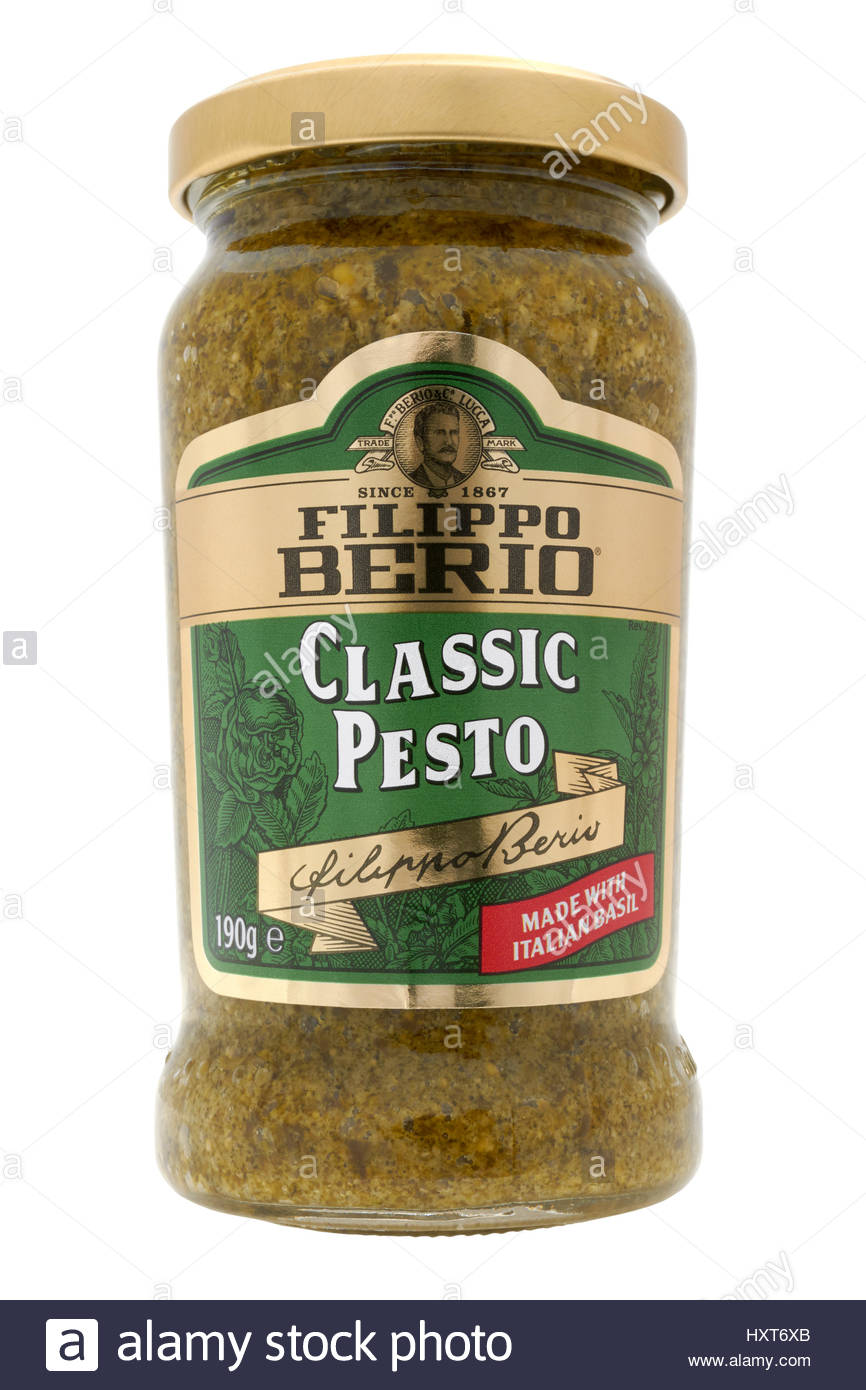
I also admire how Bottura approaches garlic in pesto - an ingredient domineering in my early memories of the sauce. The pesto I had growing up was thick with chunks of muddy green, oxidized basil, bitter garlic and tons of parmesan. The oil and the paste separated easily. 

Pesto Jar High Resolution Stock Photography and Images - Alamy


It was always delicious but a different creature altogether from Bottura’s creamy, bright green pesto. Fair warning: making pesto is both easy and a project. I definitely respect and understand buying it from a jar. It takes a little time calibrating your proportions of oil, water and herbs, and requires you to stop and mix up the blender contents repeatedly. Sometimes I find it pretty irritating, and a little messy. It requires a lot of herbs - I won’t mince words there. That can be expensive. But it also smells delicious in your kitchen and feels so much like summer. 


My friend Mac explained how every Italian household has its own pesto, its own preferred texture and palette of flavors. I love this idea. You can make your pesto as piecey or smooth as you like. It’s fun to play around with. 


The noodle


In the video, Massimo and Taka just use a nice dried fusilli. Trofie is a shape traditional to Liguria, the land of pesto. It is usually served with quarters of boiled potatoes. Both fusilli and trofie have ridges that trap pasta and sauce together. It’s special to make Trofie by hand. It’s a small shape that is time consuming to produce much of, perhaps the most time-consuming i have ever made. They are little delicate whispers of a noodle.


“Cooking is an act of love, and you do it for yourself” Bottura says. With that spirit to guide you, you can choose what pasta is best, dried or handmade. 


Trofie al Pesto 


A part of me wishes I could offer precise quantities, but pesto is more of an art than a science. I apologize in advance if this frustrates you - it has frustrated me too. Make sure you have lots of herbs on hand, at least 5 big handfuls full, after picking. 


For the Pesto: 

Makes about 1 cup 


Garlic bulb, halved 

“Garlic is very aggressive in taste,” Bottura says. He slices a bulb in half and gently rubs it once around the blender pitcher, that’s it. 


Herbs that don’t trample each other’s flavors, like Mint, Nasturtium, Thyme, Basil, maybe some oregano 

Extra Virgin Olive oil, about ½ cup 

Parmigiano Reggiano or another aged cheese, like a pecorino, or aged goat cheese, grated thinly (optional - can use more breadcrumbs instead) about ¼ cup

Breadcrumbs, about ½ c 

Salt to taste 


Swipe the garlic bulb cut side around the inside of your blender. Taka puts olive oil into the basin of the blender first. Then he adds your leafy herbs. Then add your cheese if using. Add more olive oil, but not so much as to saturate the herbs - you should still have big leafy pieces. Mix up, then add cool, good tasting water, slowly, incorporating as you go. You will probably have to stop and start the blender a few times to get all the pieces smooth. If you want a creamy texture, you will need more cold water and patience to run the blender for a longer time. Taste as you go, adding salt when needed. 


For the Pasta:  


To make the pasta dough, consult Em’s semolina + water dough blog post. 


To shape the trofie, roll your dough into long, thin (about ¼”) logs. Using a knife or a bench scraper, slice short segments of the dough on a sharp diagonal bias. Take the flat of the knife or bench scrape and apply pressure while rolling the piece along the edge. You will get a curly little flute shape. Toss prepared noodles with semolina in a baking sheet and keep a dampish towel over them, storing in a cool place while you work on the others. 


Boil noodles for about 45 seconds. They will float to the surface when they are ready. Keep some pasta water. Toss the noodles in the pesto sauce, being generous. Add a little extra virgin olive oil for some shine. Add a little pasta water for some creaminess. Serve right away. 


Keeping in mind Bottura’s freedom of exploration and experimentation, I would suggest a nontraditional pairing. The fresh, vibrant Le Puits from Les Vin Contes. It’s a chardonnay and sauvignon blanc blend that is crisp but delicate, and won’t overwhelm the flavors of the herbal green sauce. 


you can put some nasturium leaves if you have them! 


Wednesday, June 23, 2021

squid for 30

When I’m cooking for company I usually also like to try a recipe for the first time which is not typically advised for obvious reasons. I’m not totally sure I would recommend it myself. I think when I was younger my dad and his best friend Richard would use Friday night dinner as an opportunity to experiment with new recipes. Maybe this has rubbed off on me a bit and maybe that’s why when Cub and I decided to cook for 30 people I insisted upon trying this thing I had been staring at for a while. I had actually tried to prepare it earlier in the year, but the store where I did my shopping did not carry squid. C’est la vie.

This particular dish, a squid and potato stew, came from Margot Henderson’s cookbook You’re All Invited: Margot’s Recipes for Entertaining. She is one of chef/owners of Rochelle Canteen, a very fashionable restaurant in London that serves lunch every day and dinner some days. So I imagine she, especially at this stage in her career, has time to entertain for dinner. Her style is very straight forward in the way that I’ve been craving, referencing both her peers in cookery and experiences as a mom. It is important to add too that she is the wife of the chef Fergus Henderson, and as half of a different hospo couple I feel drawn to her, at least partially, for this reason. As the title makes clear the book is designed with a party in mind and the stew comes from a particularly useful section called “Feeding the masses”. Each recipe is modestly presented for four people while also scaling a few times up to 30 which is useful if only to spark your imagination and offer you confidence that not only is it possible it’s roughly the same experience.


The squid dish is inspired by our lady of squid Marcella Hazan’s recipe for Squid and Potatoes Genoa Style from Essentials of Classic Italian Cooking. Henderson’s differs in a swap of marjoram for crushed red pepper and more garlic. I think Marcella Hazan might have balked about the amount of garlic in the dish, we kind of did. Garlic can be hard with wine, but we chose to split to difference by crushing each clove instead of finely chopping as suggested. This was also due to my refusal to finely chop 60 cloves of garlic for the dish, hosts have other things to think about. Another change we made that differed from both Hazan and Henderson is that we used two tins of tomatoes instead of one as written. Which was less stylistic and more due to my forgetting, but I think it worked well and I would do it again the next time I pursue this.


Margot Henderson suggests not to make the recipe in advance, so we tried to make as big of a dent in prep as we could. Peeling the garlic and potatoes in the afternoon before people arrived. It's nice to have the opportunity to cut so many potatoes, I kept thinking and rethinking about how I big I wanted a bite to be. They were not uniform, which eventually led to some murkiness in our broth but I valued variety of bite and texture more that day. That's maybe one of my favorite parts about parties, the little moments where you can let the anticipation build. We then finished it up that evening, when we were starting to feel hungry though it was a blazing hot day and I was regretting the choice of recipe. We left our guests outside for a bit as we endeavored to do the stew in the kitchen, meanwhile the sky opened up and offered a hard & brief rain. It was blessedly chilly after and everyone wanted the stew. With the rain returning I thought of this recipe again, light and warming. Perfect for a chilly summer evening, the kind where you can turn your stove on. And make more if you can, you never know who might end up at your house.


                                                                          pic by Mac Parsons


Rainbow Wines’ Squid and Potato Stew for 30, after Margot Henderson & Marcella Hazan updated due to circumstance & convenience*


10 lb cleaned squid

12 lb waxy potatoes

800 ml very good olive oil

50 cloves of garlic, smashed

7 tsp dried red chili flake

6 large handfuls chopped parsley

2 tins (28 oz.) whole tomatoes

1 liter water


Cut the squid into ½ inch pieces. Leave the tentacles whole unless they are very large. 


Peel the potatoes and cut into 2 -3 in chunks. 


Now prepare to cook the squid in batches of around 1 batch per 2 lbs of squid: 


Over medium heat, warm some of the olive oil in a wide heavy bottomed pan. Add some of the garlic, chili flakes and parsley and some salt**. Cook for a couple of minutes then turn up the heat and add the squid. Cook for 2 - 3 minutes, until it is sizzling away, add a little more salt, then add a good splash white wine and let it bubble for 1 - 2 minutes to reduce. 


Dump the squid mixture into a big pot, and repeat if working in batches. 


Place the potatoes and the water in this big pot as well. Break apart the tomatoes in your hands and add to the pot. Bring this mixture to a boil, then turn down to a simmer. Keep the heat low, gently simmering away, with the lid on for about 40 minutes. Stir occasionally, until the potatoes are cooked through. Season to taste and serve hot to lukewarm even is good.


*Margot Henderson says you can’t make this in advance but Cub and I both enjoyed our leftovers a lot. The potato disintegrates making for a murkier color and texture, and softens the sharpness of the wine/tomato acidity.

**if you wanted to add some marjoram here I bet it would be good. I love marjoram.


pic by Mac Parsons

We drank Paski from Cantina Giardino with this and I recommend it whole heartedly. It was from a very large bottle which added to the sensation so I may also suggest a magnum of their Rosato, a fun surprise from the El Rancho warehouse. Definitely recommended to get the cold cold wine going with the hot stew.


We’re adding some new things to the shop this week from L’Octavin and getting a restock of La Clarine rosé too. DM @rainbow_wines or send us an email at rainbowwinechi@gmail.com if you have any questions or want to chat. 


Wednesday, June 16, 2021

a salad story

I had been craving peas. I keep frozen peas just about all the time to add to soup or pasta. But I was wanting fresh peas, I was wanting to lovingly shuck them and enjoy them for dinner. It’s June. Peas time. I’ve been wanting to also eat less meat lately. With vegetables that require more effort to prepare, my pathological mind somehow decides these earn their place on the dinner plate where meat is not present. I guess there’s some innate comparison to the incredible use of resources (not only labor) in raising, harvesting, butchering meat. I’d like to not think like that, but at least it means I like to lavish time on preparing vegetables (not to mention how much work and care goes into growing and harvesting them). 


i made this drawing of peas while watching star trek, i love them 


 Nichols farm has some peas. They were deliciously sweet. It was also very hot last week so we decided to have salad for dinner. I started to build this dinner salad around the peas. I love how many other foods work so well with peas - how the peas sit on the surface, absorb fat and flavor, and add a vegetal crunch. I really love peas with pork - with bacon, ham or pork fat. It feels sort of 1950s. We happened to have some Casella’s prosciutto in the pantry. You can buy it in sealed packs that last a while and don’t require refrigeration, which is nice. With the prosciutto I was then thinking about egg, would it be eggy dressing, a poached egg on the bottom of the plate would impart silky egg yolk, and add some protein to the dish. I also love peas with potatoes, and I am there for potatoes in a salad any time. We eat a lot of delicious boiled potatoes in my house. We didn’t have any bread to make croutons, but even if we did, I wouldn’t have thought of it. Poached egg, mustardy piquant vinaigrette, greens, ham. A couple small boiled potatoes cut in quarters at the bottom of the dish (yukon golds from Nichols also) and peas. A bright white wine made this a really beautiful dinner. Le Pressoir de St Pierre from La Grapperie would be divine - it’s a kind of herbaceous Chenin Blanc from the Loire Valley with golden acidity and mellow richness, enough to match all the layers of fat in the salad. This wine we have tested happily a few times to see how it is with salad, and can say it is delicious. 

 It was very tasty. The greens got wilted rather fast, however, with the heat of the egg plus the richness of the yolk with the vinaigrette too. I kind of enjoy wilty greens sometimes, just sometimes. They feel in process. They are easy to eat a lot of. But I thought, if I make this again, I will use a hearty green, like escarole, or better yet something that can absorb the dressing without melting like frisee. And I might crisp the prosciutto. And maybe croutons would be better than potatoes, or a nice addition for chew. 

Then I realized, this was just a salade Lyonnaise. Salade Lyonnaise is lardons, frisee, poached egg, croutons, vinaigrette. It is an important dish, a foundation of Lyonnaise cuisine, itself founded in the 16th century when Catherine of Medici brought her chefs to France and ordered them to cook with produce sourced around the country. It’s about layering fat and flavor. The realization didn’t upset but amused me. I wasn’t trying to make an original salad, but I did feel like it was sort of a crazy combination, until I realized, there are very few, maybe no crazy combinations left in this world. This breakfast for dinner / salad for dinner melange is just another delicious corruption of something old. 

 Contaminated salade Lyonnaise 

 Handful of peas, freshly shucked if you can, gently cooked in boiling water for 1 minute 
Couple slices of torn Prosciutto, or Lardons 
Boiled potatoes, cut in quarters 
 Poached egg 
 Hearty greens 

 for the vinaigrette: 
 1 tsp dijon mustard 
 1 tablespoon white wine vinegar 
 4 tablespoons olive oil 
 Sprinkle of salt 

 Mix the mustard and the vinegar, then slowly add the olive oil and finish with the salt. 

 Place your potatoes, your egg and a few pieces of prosciutto on the bottom of the plate. Toss the remaining ingredients in vinaigrette, then pile up on your plate. Enjoy, outside, if possible, with a glass of French white wine. 


a photo i found online someone took of their salad Lyonnaise from Le Bouchon in Las Vegas. 


 Lots of new wines in this weekend - stay tuned to the store, instagram and also - sign up for our email newsletter using the link on this blog for the deep dive on what’s going on every weekend. Hope you get to shuck some peas soon, if that sounds good to you.